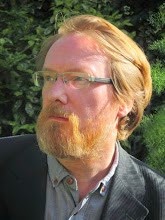
What a pleasure it was to hear Nick Griffin again on Radio 5 Live this morning. I'd forgotten he was still with us, indeed that he's still an MEP (for another week at least).
If dictionaries could talk, their definition of a busted flush would sound just like Griffin did today. Hard to remember how big a bogeyman he was just five years ago, when the BNP were on the rise.
As one might imagine, there was no attempt on the part of Nicky Campbell to conceal his loathing of Griffin in the interview (and I use the word loosely), but it felt a bit like kicking a blind beggar. The BNP thunder has long since been stolen by UKIP, and Griffin was just flailing wildly as he sinks into irrelevance.
One of the few points he managed to get in, during his allotted three minutes, was a claim that the BNP's poll ratings had gone up after he appeared on BBC One's Question Time in 2009. Having just checked, it's clear that he's not entirely lying, though there is an element of exaggeration.
Which reminded me of Nigel Farage on Question Time last week. That appearance provoked complaints on Twitter and elsewhere about how much airtime the UKIP leader was getting, but the reason for that was simple: all the other panellists had decided to gang up on him. Just as they did against Griffin five years ago. And if the response to someone as personally unappealing as Griffin was to increase his poll ratings, what is the likely effect when the same tactic is applied to Farage?
It seems that no one learns. If a fringe politician makes as his central appeal a claim to be against the establishment, then it does him no harm at all when the establishment behaves in such a way as to demonstrate that point for him on national television.
Showing posts with label Question Time. Show all posts
Showing posts with label Question Time. Show all posts
Wednesday, 14 May 2014

Saturday, 29 October 2011
Further to my last post...
The Dimbleby-hosted Any Questions on BBC radio lives these days somewhat in the shadow of the Dimbleby-hosted Question Time on BBC television. It's an impression that's hardly dispelled by the way they seem to share the same booking policy.
So last night's programme featured a panel comprising a Tory MP, an ex-Tory MP turned journalist and a Lib Dem MP. Oh, and there was a Labour MP as well.
Again there's that feeling that political debate in the country is concentrated almost exclusively within the coalition and their fellow-travellers. The Labour Party continues to look marginal at best.
And perhaps there's a pattern emerging with Labour's choice of panellists. On Question Time it was the 39-year-old Gloria de Piero, already a member of Ed Miliband's shadow team barely a year after her election. On Any Questions it was the 32-year-old Rachel Reeves, already a member of Ed Miliband's shadow team barely a year after her election.
Neither has any political weight or status at this stage, but maybe that's the point. These are the potential stars of the next parliament being given a chance to get a bit of exposure and experience. The unmistakable impression, however, is that Labour's given up on the idea of opposition for the immediate future and is building for the world after the next election.
So last night's programme featured a panel comprising a Tory MP, an ex-Tory MP turned journalist and a Lib Dem MP. Oh, and there was a Labour MP as well.
Again there's that feeling that political debate in the country is concentrated almost exclusively within the coalition and their fellow-travellers. The Labour Party continues to look marginal at best.
And perhaps there's a pattern emerging with Labour's choice of panellists. On Question Time it was the 39-year-old Gloria de Piero, already a member of Ed Miliband's shadow team barely a year after her election. On Any Questions it was the 32-year-old Rachel Reeves, already a member of Ed Miliband's shadow team barely a year after her election.
Neither has any political weight or status at this stage, but maybe that's the point. These are the potential stars of the next parliament being given a chance to get a bit of exposure and experience. The unmistakable impression, however, is that Labour's given up on the idea of opposition for the immediate future and is building for the world after the next election.
Thursday, 27 October 2011
The Man Who Wasn't There
As I was going up the stairs
I saw a man who wasn’t there;
He wasn’t there again today...
While the usual suspects on the Eurosceptic right (Simon Heffer, Norman Tebbit et al) continued to demonstrate that they haven't quite got the hang of this coalition business, and as the government took its collective sledgehammer to some backbench nuts, there was a missing voice in the coverage of this week's debate about a possible EU referendum.
It happened again on the BBC's Question Time this evening. The panel comprised a Tory cabinet minister, a Tory peer, a Lib Dem and the leader of the UKIP. Oh, and there was a Labour MP as well. But she had nothing to say.
Where exactly is the Labour Party these days? I know that it had problems after the election, when Gordon Brown disappeared in a puff of sulk and the media decided that the coalition was a much more interesting story, but that was last year. It really should be making a bit more of the running by now.
Admittedly Labour is ahead in the opinion polls. But not by much. And the gap was wider during the summer (six to eight percentage points) than it has been over the last month or so (three to five points). Or to put it another way, the party was doing better when all the politicians were on holiday and there was an absence of debate.
Which does seem to be the problem. It feels as though Labour has a lead in the polls simply because they exist and aren't in the government. And as long as no one listens to a word they say, they'll stumble along as a protest option. But while the government is obviously unpopular - how could it not be? - that's not going to be enough.
Around this stage of the first government of Margaret Thatcher, when she was also pursuing unpopular economic policies, the Labour Party was touching 50 per cent in the polls, not the 40 to 42 per cent that it's stuck on now. Even in the early days of Michael Foot's leadership, the party had a massive lead in the polls.
The truth is that polls at this point aren't of any significance. What's important is trying to seize some kind of control of the agenda. And Ed Miliband's Labour Party is doing nothing of the kind.
I saw a man who wasn’t there;
He wasn’t there again today...
While the usual suspects on the Eurosceptic right (Simon Heffer, Norman Tebbit et al) continued to demonstrate that they haven't quite got the hang of this coalition business, and as the government took its collective sledgehammer to some backbench nuts, there was a missing voice in the coverage of this week's debate about a possible EU referendum.
It happened again on the BBC's Question Time this evening. The panel comprised a Tory cabinet minister, a Tory peer, a Lib Dem and the leader of the UKIP. Oh, and there was a Labour MP as well. But she had nothing to say.
Where exactly is the Labour Party these days? I know that it had problems after the election, when Gordon Brown disappeared in a puff of sulk and the media decided that the coalition was a much more interesting story, but that was last year. It really should be making a bit more of the running by now.
Admittedly Labour is ahead in the opinion polls. But not by much. And the gap was wider during the summer (six to eight percentage points) than it has been over the last month or so (three to five points). Or to put it another way, the party was doing better when all the politicians were on holiday and there was an absence of debate.
Which does seem to be the problem. It feels as though Labour has a lead in the polls simply because they exist and aren't in the government. And as long as no one listens to a word they say, they'll stumble along as a protest option. But while the government is obviously unpopular - how could it not be? - that's not going to be enough.
Around this stage of the first government of Margaret Thatcher, when she was also pursuing unpopular economic policies, the Labour Party was touching 50 per cent in the polls, not the 40 to 42 per cent that it's stuck on now. Even in the early days of Michael Foot's leadership, the party had a massive lead in the polls.
The truth is that polls at this point aren't of any significance. What's important is trying to seize some kind of control of the agenda. And Ed Miliband's Labour Party is doing nothing of the kind.
Friday, 30 September 2011
Mr Street-Porter
Back in 2003, when I was researching a book about Biba, I wrote to Janet Street-Porter, thinking that she might have something intelligent to say about a shop she used to frequent. She didn't, of course, but she did at least write back, even if she did talk patronising rubbish. And even if she did address me as Ms Turner.
I had little time or respect for her before, but I'm afraid that I had even less after that.
Anyway, Mr Street-Porter was on Question Time last night, denouncing a mooted proposal to raise the speed limit on motorways to 80 mph as a 'crowd-pleasing, cheap policy'. Is that really a problem? Crowd-pleasing policies don't seem to me necessarily a bad thing in a democracy. Particularly if they're cheap.
I had little time or respect for her before, but I'm afraid that I had even less after that.
Anyway, Mr Street-Porter was on Question Time last night, denouncing a mooted proposal to raise the speed limit on motorways to 80 mph as a 'crowd-pleasing, cheap policy'. Is that really a problem? Crowd-pleasing policies don't seem to me necessarily a bad thing in a democracy. Particularly if they're cheap.
Subscribe to:
Posts (Atom)