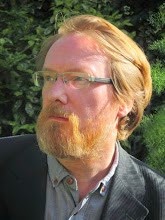
The post-War history of the Labour Party is littered with the best leaders it never had. Apart from these ten (listed in chronological order), cases could also be made for the likes of Barbara Castle, David Owen and Peter Hain. But not for Roy Hattersley.
1. Aneurin Bevan (1955)
After Clement Attlee led Labour to a second successive general election, he stepped down as leader. In a three-way poll, Hugh Gaitskell won an outright majority on the first ballot, defeating Peter Mandelson’s granddad, Herbert Morrison, and Nye Bevan. In terms of previous jobs, Bevan was the least experienced – Gaitskell had been chancellor, and Morrison had been both home and foreign secretary – but he had created the NHS, which gave him a certain weight. He’d also written In Place of Fear, one of the great works of British socialism and still a source of inspiration. But he was seen then, as leaders of the left so often are, as a divisive figure and his failure to carry his fellow MPs with him set a pattern that was repeated over the years.
2. Roy Jenkins (1971)
In the debate over British entry into the Common Market (as we used to call the future European Union), Jenkins led a dissident group of Labour rebels into the ‘yes’ lobby, defying a three-line whip even though he was the party’s deputy leader. Labour was then in opposition and its leader, Harold Wilson, was far from secure. The possibility existed for Jenkins to resign on the European issue and challenge directly for the leadership. He would have been good at it as well, and would have done far better at the subsequent election. Mind you, Britain would have been much more engaged in Europe, which may or may not be a good thing, depending on your views.
3. Tony Crosland (1976)
What a field of candidates there was in the election to replace Wilson as leader and therefore as prime minister. Jim Callaghan won eventually, but first he had to see off Michael Foot, Roy Jenkins, Tony Benn and Denis Healey. And the foreign secretary Tony Crosland, who got barely five per cent of the MPs’ votes. Given that he died less than a year later, it was probably not too catastrophic for Labour that Crosland didn’t make it, but he would have been a decent choice: a social democrat intellectual who was capable of adjusting and evolving his thought in the light of circumstance.
4. Denis Healey (1980)
The choice of who should replace Callaghan after the disastrous election defeat of 1979 was so obvious and so stark – Denis Healey versus Michael Foot – that only the Labour Party could screw it up. So they did, rejecting the most popular politician they had, the one man almost guaranteed to beat Margaret Thatcher. Choosing Healy as leader would have caused major problems in the party, but since those came anyway, it’s hard to see how much worse it could have been. Most importantly, the SDP would never have been born.
5. Tony Benn (1981)
Largely thanks to Benn’s efforts, the franchise was widened for the election of party leader, allowing affiliated trades unions and constituency parties a say. So Benn stood for the deputy leadership, to try out the new system, he said. It was a bit of a cop-out, and a straight fight for the leader’s job would have been more engaging. He would have lost, of course, but had he won, he might well have done better in the 1983 election than Foot managed – the press abuse could hardly have been more vitriolic, and Benn did genuinely inspire some of the people some of the time in a way that Foot simply didn’t.
6. Peter Shore (1983)
The inevitable defeat of Labour in 1983 saw the equally inevitable replacement of Foot by his protégé Neil Kinnock. Trailing a very poor fourth in the election (beaten even by Eric Heffer, embarrassingly enough) was Peter Shore, an intriguing figure who no one could ever quite place within the left-right spectrum. He campaigned against membership of the EEC, argued against restrictive practices in the trade unions and, as shadow chancellor, was one of the few successes during Foot’s doomed leadership. I always rather liked him as a politician: he was thoughtful, intelligent and courteous. He also had very messy hair, though it was nowhere near the state of...
7. Shirley Williams (1987)
This is pure fantasy time, since Our Shirl was already long gone from Labour, having left to co-found the SDP in 1981. But if she had still been around when Kinnock failed to win the 1987 general election, she would have made the perfect replacement. And a perfect foil for Margaret Thatcher. In the words of a Times leader: ‘Mrs Williams talks to the British people in their own accents, sometimes muddled, often courageous, always human and always kind.’
8. Bryan Gould (1992)
In a straight fight between John Smith and Bryan Gould to replace Neil Kinnock as leader, the Labour Party once again got it wrong. On the single most important issue of the day – British membership of the European exchange rate mechanism – Smith made the wrong call and, had there been any such thing as natural justice, would have been as discredited as John Major when Britain got kicked out of the ERM on Black Wednesday. Gould, on the other hand, had always stood against the tide, arguing for policies based on the real economy rather than monetarist dogma. He was a true moderniser with a sound grasp of economics that shamed the young turks Tony Blair and Gordon Brown. And, of course, he didn’t die in 1994, as Smith did, so that Blair might have been kept in his box.
9. Robin Cook (1994)
After Smith’s death, there were just three candidates for the leadership: Tony Blair, John Prescott and Margaret Beckett. Unsurprisingly Blair won at a canter, since the other runners were clearly so implausible. The man who didn’t stand was Labour’s strongest performer in the Commons, Robin Cook, a brilliant and principled politician with twenty years as an MP. He decided against going for the leadership on the grounds that he was ‘too ugly’ to be prime minister, but he was wrong: there was far too much character in his face for him to be unattractive. And anyway, given the state of the Tories by 1997, a monkey on a stick could have won that general election.
10. David Miliband (2007)
Why, oh why, were the Labour Party so stupid that they chose Gordon Brown to replace Tony Blair? More to the point, why were they so craven that they didn’t even have an election? Brown clearly stood no chance up against David Cameron, but his fatal flaw – his indecisiveness – was sadly echoed in the person of David Miliband, his most plausible challenger. By the time Miliband had screwed his courage to the sticking-plate, it was too late and Ed came through as the ‘Stop David’ candidate.
Showing posts with label Roy Jenkins. Show all posts
Showing posts with label Roy Jenkins. Show all posts
Friday, 13 April 2012

Saturday, 5 July 2008
A Very Strange Woman
My most recent book - Crisis? What Crisis? Britain in the 1970s - is published by Aurum Press. Aurum has its own blog, where you might sometimes see my scribblings. But since I'd like to keep my stuff together, I'm re-posting this piece that I wrote on 29 May 2008, following the BBC drama about Mary Whitehouse...
I had the pleasure of Mary Whitehouse once.
Back in the late-1970s she came to my school to lecture us about the evils of the modern world, the moral pitfalls that we, as tender teenagers, should take care to avoid.
I asked her a question, in fact. Asked her about how absurd it was that the blasphemy laws protected a minority faith in a secular society. (This in the context of the prosecution she was mounting of Gay News magazine for blasphemous libel.) She didn’t answer, of course – she was too seasoned for the likes of me to get even to first base.
But two things stayed with me from her speech.
First, her obsession with communism. She argued that the Soviet Union was attempting to undermine capitalism, democracy and Christianity (which were apparently interchangeable constructs) through the medium of pornography.
And second, her belief that her campaign to clean the filth out of society had been successful. She cited as evidence for this the absence of satire on television, perhaps failing to notice that by that stage the Sex Pistols meant a great deal more to most of us than That Was The Week That Was. She was, I thought, too busy celebrating past conflicts to recognize that the country had changed, and that all the changes were, from her point of view, surely for the worse.
Amanda Coe’s play, Filth: The Mary Whitehouse Story, on BBC2 last night, was equally stuck in the mud of an old battlefield. Centred on Whitehouse’s struggle to get a hearing from the BBC – and from her sworn enemy Hugh Carleton Greene, the then director-general – it was set entirely in the 1960s. And, as her friend Bill Deedes once pointed out, ‘The 1960s were rough times for people with the message Mrs Whitehouse sought to deliver.’
The Whitehouse we saw was thus an essentially impotent figure. Played by Julie Walters in a manner that was less Mary Whitehouse than it was, er, Julie Walters, she was seen as a thorn in the flesh of the BBC, but little more than a thorn. Perfectly true of the times, of course, but she became much more significant.
The play followed her from her days as concerned Christian parent into the birth of her more familiar incarnation as a self-publicizing complainer about pretty much anything and everything: Dr Who, Pinky and Perky, the lyrics of the Beatles’ ‘I Am the Walrus’ (not for its clear drug-fuelled consciousness, but for the use of the word ‘knickers’). And then it stopped. Which was a shame, because that’s just when she became really interesting.
Amidst all the headline-grabbing stuff in the early-1970s about Chuck Berry’s ding-a-ling, Whitehouse had a much more political agenda. The mass membership of her National Viewers and Listeners Association (VALA) was primarily motivated by a distaste for what was perceived to be obscenity, but she had no hesitation in using the platform this gave her to intervene in matters of party politics. For her, as for Roy Jenkins on the opposite side of the fence, permissiveness and liberalism skipped hand-in-hand.
Amd she didn't approve.
So when Panorama had the nerve to ask some difficult questions of Northern Ireland prime minister, Brian Faulkner, she demanded to know ‘where the sympathies of the BBC lie in relation to Northern Ireland’. And during the three-day week in January 1974, called by Tory prime minister Ted Heath in response to an overtime ban by the National Union of Miners, she denounced the corporation for being ‘committed to polarisation of public sentiment in favour of the miners.’
There was just a hint of this in Filth, as Whitehouse complained about the BBC’s ‘propaganda for the left that verges on communism’. But mostly the play presented her as a single-issue campaigner. ‘Dearie me,’ she said, ‘we’re not political.’
And that simply wasn’t true. She’d first met her husband, Ernest (played brilliantly here by Alun Armstrong) in the 1930s when they were both members of the evangelical Oxford Group, later known as Moral Re-Armament. And although the Oxford Group was primarily and overtly religious, it had a strong political, as well, as moral, compass. Its founder, Frank Buchman, was so committed to the cause of anti-communism that he was even seduced by the ideological allure of fascism: ‘I thank Heaven for a man like Adolf Hitler,’ he enthused in 1936.
The Whitehouses shared Buchman’s passionate opposition to the Soviet Union as a godless, evil force in the world. Ernest Whitehouse believed that the Book of Daniel in the Old Testament prophesied the (temporary) triumph of communism, and his wife had no hesitation in seeing reds both under and in the bed: ‘They’ve infiltrated the trade unions,’ she argued. ‘Why does anyone still believe they haven’t infiltrated broadcasting?’
As VALA continued into the political turmoil of the 1970s, these attitudes – present from the outset – came ever more to the fore, helping to build the social coalition that would ultimately see the election of Margaret Thatcher in 1979.
Whitehouse’s ability to win battles remained dubious at best, and the campaigns against sex and swearing on television were ultimately doomed to failure. But she did live to see a new right-wing consensus built in this green and pleasant land. And she even lived to see the overthrow of communism in Eastern Europe.
Which brings me back to that claim of hers that’s been baffling me for nearly thirty years now. Was she really saying that porn was fuelled by Moscow gold? Did she really believe that the controlling interest in capitalism’s most profitable industry was held by the Soviet Union, at a time when that country was not exactly renowned for its ability to foster enterprise? And if so, who’s funding it now, when the Internet is being deluged with porn from the democratic nations of the former Soviet bloc?
What a very strange woman she was.
I had the pleasure of Mary Whitehouse once.
Back in the late-1970s she came to my school to lecture us about the evils of the modern world, the moral pitfalls that we, as tender teenagers, should take care to avoid.
I asked her a question, in fact. Asked her about how absurd it was that the blasphemy laws protected a minority faith in a secular society. (This in the context of the prosecution she was mounting of Gay News magazine for blasphemous libel.) She didn’t answer, of course – she was too seasoned for the likes of me to get even to first base.
But two things stayed with me from her speech.
First, her obsession with communism. She argued that the Soviet Union was attempting to undermine capitalism, democracy and Christianity (which were apparently interchangeable constructs) through the medium of pornography.
And second, her belief that her campaign to clean the filth out of society had been successful. She cited as evidence for this the absence of satire on television, perhaps failing to notice that by that stage the Sex Pistols meant a great deal more to most of us than That Was The Week That Was. She was, I thought, too busy celebrating past conflicts to recognize that the country had changed, and that all the changes were, from her point of view, surely for the worse.
Amanda Coe’s play, Filth: The Mary Whitehouse Story, on BBC2 last night, was equally stuck in the mud of an old battlefield. Centred on Whitehouse’s struggle to get a hearing from the BBC – and from her sworn enemy Hugh Carleton Greene, the then director-general – it was set entirely in the 1960s. And, as her friend Bill Deedes once pointed out, ‘The 1960s were rough times for people with the message Mrs Whitehouse sought to deliver.’
The Whitehouse we saw was thus an essentially impotent figure. Played by Julie Walters in a manner that was less Mary Whitehouse than it was, er, Julie Walters, she was seen as a thorn in the flesh of the BBC, but little more than a thorn. Perfectly true of the times, of course, but she became much more significant.
The play followed her from her days as concerned Christian parent into the birth of her more familiar incarnation as a self-publicizing complainer about pretty much anything and everything: Dr Who, Pinky and Perky, the lyrics of the Beatles’ ‘I Am the Walrus’ (not for its clear drug-fuelled consciousness, but for the use of the word ‘knickers’). And then it stopped. Which was a shame, because that’s just when she became really interesting.
Amidst all the headline-grabbing stuff in the early-1970s about Chuck Berry’s ding-a-ling, Whitehouse had a much more political agenda. The mass membership of her National Viewers and Listeners Association (VALA) was primarily motivated by a distaste for what was perceived to be obscenity, but she had no hesitation in using the platform this gave her to intervene in matters of party politics. For her, as for Roy Jenkins on the opposite side of the fence, permissiveness and liberalism skipped hand-in-hand.
Amd she didn't approve.
So when Panorama had the nerve to ask some difficult questions of Northern Ireland prime minister, Brian Faulkner, she demanded to know ‘where the sympathies of the BBC lie in relation to Northern Ireland’. And during the three-day week in January 1974, called by Tory prime minister Ted Heath in response to an overtime ban by the National Union of Miners, she denounced the corporation for being ‘committed to polarisation of public sentiment in favour of the miners.’
There was just a hint of this in Filth, as Whitehouse complained about the BBC’s ‘propaganda for the left that verges on communism’. But mostly the play presented her as a single-issue campaigner. ‘Dearie me,’ she said, ‘we’re not political.’
And that simply wasn’t true. She’d first met her husband, Ernest (played brilliantly here by Alun Armstrong) in the 1930s when they were both members of the evangelical Oxford Group, later known as Moral Re-Armament. And although the Oxford Group was primarily and overtly religious, it had a strong political, as well, as moral, compass. Its founder, Frank Buchman, was so committed to the cause of anti-communism that he was even seduced by the ideological allure of fascism: ‘I thank Heaven for a man like Adolf Hitler,’ he enthused in 1936.
The Whitehouses shared Buchman’s passionate opposition to the Soviet Union as a godless, evil force in the world. Ernest Whitehouse believed that the Book of Daniel in the Old Testament prophesied the (temporary) triumph of communism, and his wife had no hesitation in seeing reds both under and in the bed: ‘They’ve infiltrated the trade unions,’ she argued. ‘Why does anyone still believe they haven’t infiltrated broadcasting?’
As VALA continued into the political turmoil of the 1970s, these attitudes – present from the outset – came ever more to the fore, helping to build the social coalition that would ultimately see the election of Margaret Thatcher in 1979.
Whitehouse’s ability to win battles remained dubious at best, and the campaigns against sex and swearing on television were ultimately doomed to failure. But she did live to see a new right-wing consensus built in this green and pleasant land. And she even lived to see the overthrow of communism in Eastern Europe.
Which brings me back to that claim of hers that’s been baffling me for nearly thirty years now. Was she really saying that porn was fuelled by Moscow gold? Did she really believe that the controlling interest in capitalism’s most profitable industry was held by the Soviet Union, at a time when that country was not exactly renowned for its ability to foster enterprise? And if so, who’s funding it now, when the Internet is being deluged with porn from the democratic nations of the former Soviet bloc?
What a very strange woman she was.
Subscribe to:
Posts (Atom)